
Responsible sourcing · Agroforestry
A Banana Plant Can Be More Than a Banana Crop
A banana plant can produce fruit, provide shade and help hold together a more diverse working landscape.
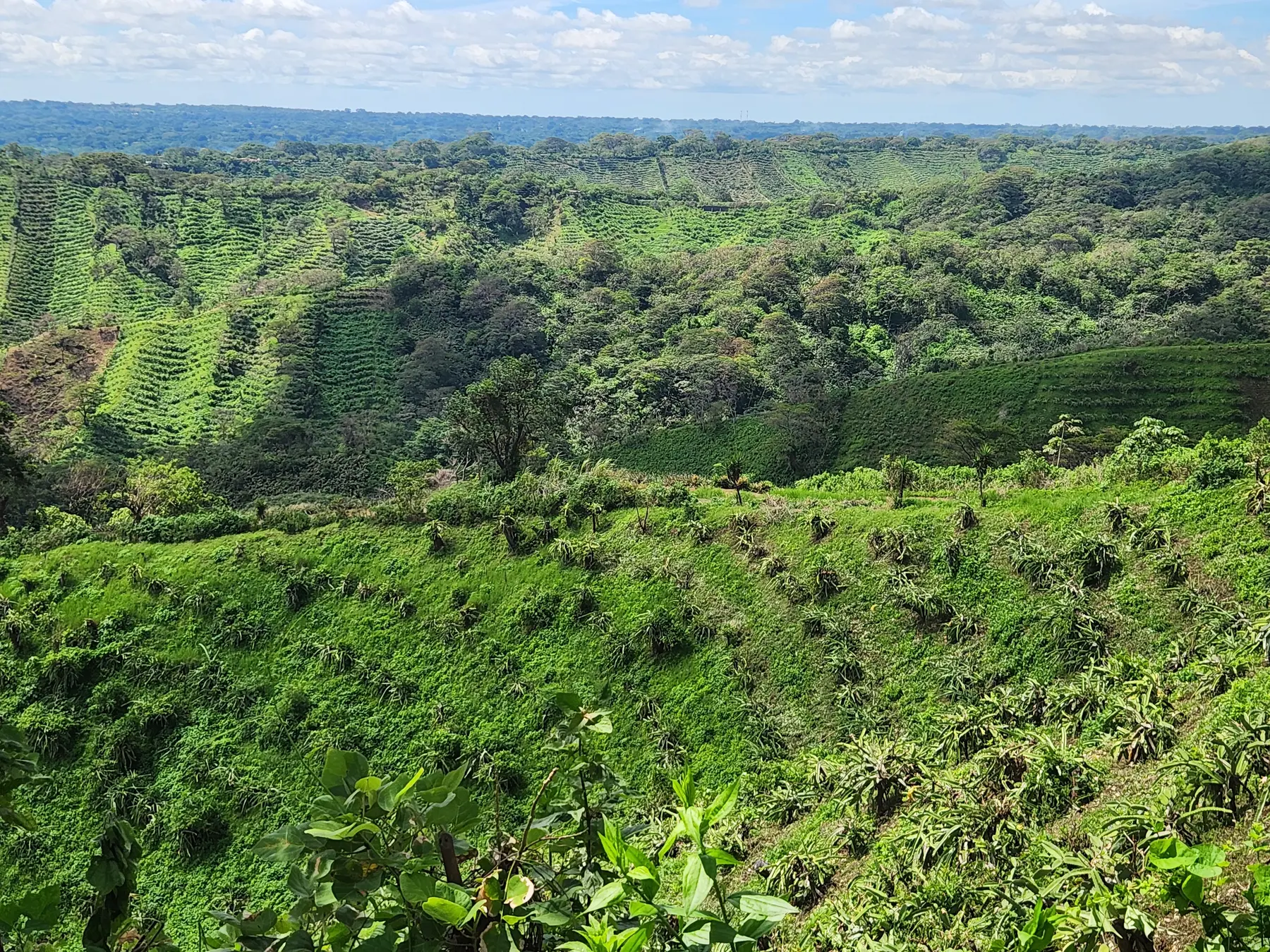
A banana plant looks different when you stop viewing the farm one crop at a time.
In a coffee field, banana and plantain may be harvestable crops. They may also contribute shade. Trees and complementary plants share the space, creating a system that looks less like a uniform plantation and more like a working landscape.
For many farmers connected to our program, this is not a new invention dressed in regenerative vocabulary. Mixed and shaded systems draw on traditional practice. Our role is to help maintain and document the practices through technical accompaniment, internal policies and certification requirements where applicable.
That distinction matters.
Responsible sourcing should not erase farmer knowledge by pretending every useful practice began when a buyer or certifier arrived. It should identify what already works, understand why it works and help the farm keep doing it under commercial pressure.
Within these systems, coffee growers integrate multiple plant species and complementary crops. Banana and plantain can contribute shade while giving the household another crop to use or sell. Vegetative cover helps keep soil protected. A more complex farm can also retain more of the flora and fauna already present than a simplified field.
The commercial value is just as important as the ecological value.
A practice lasts when it fits the farm’s livelihood. Shade cannot be discussed as an abstract environmental benefit if the system leaves the farmer without a viable harvest. The strength of agroforestry is that several functions can occupy the same space: coffee production, banana or plantain, tree cover, soil protection and household income.
For ingredient buyers, this creates a richer way to understand origin.
“Grown in Nicaragua” tells you where the crop began. A farm-system story can explain what grew alongside it, which practices were traditional, what technical support helped maintain them and what evidence exists through internal visits, agronomic reports and certification audits.
That evidence does not turn biodiversity into a decorative claim. It helps a sustainability team ask better questions:
- Which species and crops share the farm?
- How much tree or vegetative cover is maintained?
- Is banana or plantain functioning as shade, a commercial crop or both?
- Which practices are widespread and which are farm-specific?
- What records and photographs can support the story?
The banana plant, viewed alone, is an ingredient source. Viewed within the farm, it can also be part of the architecture that makes another crop possible.
Read the system, not just the crop
Mixed coffee systems, banana and plantain as complementary shade crops, vegetative cover and conservation practices give buyers a richer view of origin than a crop name alone.
The practical opportunity is to connect those visible farm practices with current certification records, specifications and traceability for the exact ingredient under review.
Talk with us about banana and plantain sourcing , available formats and the farm documentation relevant to your responsible-sourcing goals. Contact our team →
Product-development resource
Agroforestry questions for ingredient buyers
Move beyond a crop name. Ask how the crop functions within the farm and how that origin story connects to the ingredient being qualified.
Based on our field-program case notes on mixed coffee, banana and plantain systems in Nicaragua, supported by current farm documentation and product qualification records.