
From Soil to Shelf: The Lifecycle of Regenerative Tropical Fruits
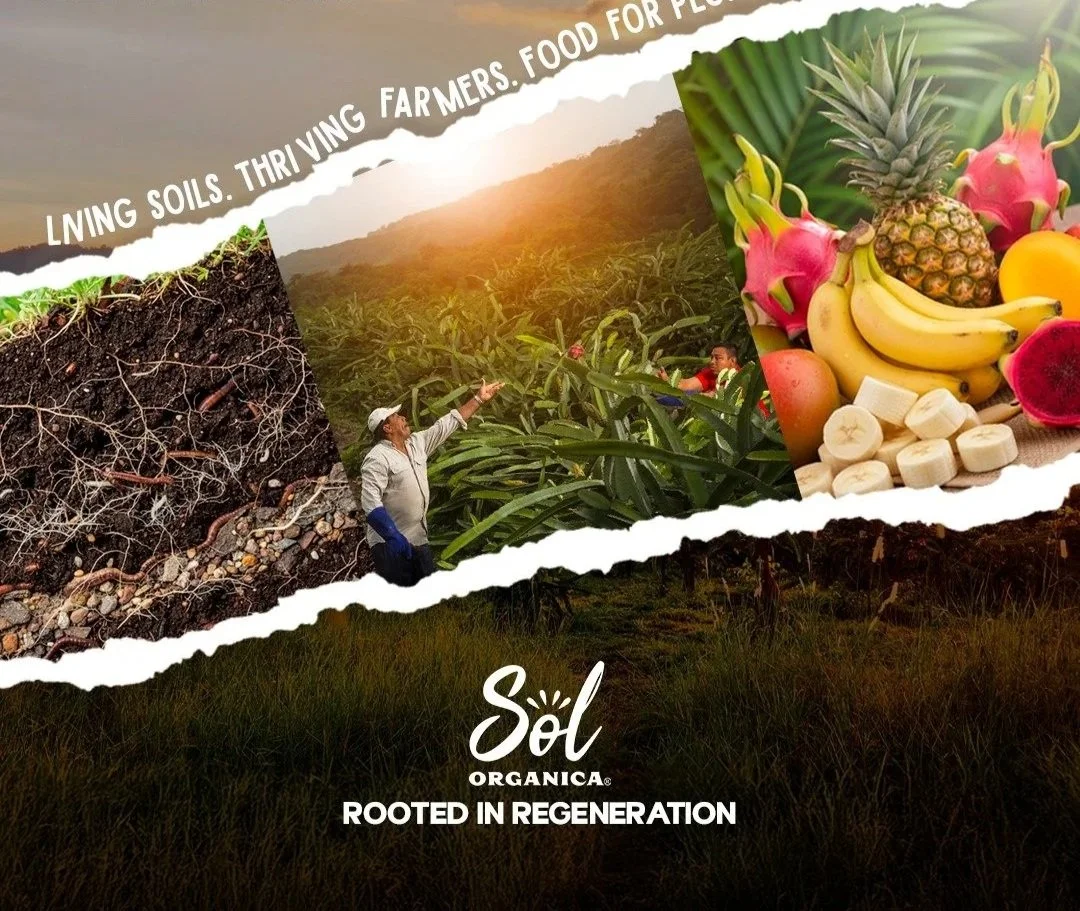
For most ingredient buyers, quality begins with specifications. For Sol Organica, it begins long before that, in the soil itself. The journey of our tropical fruits is shaped by a regenerative organic model that values people, land, and long-term resilience, creating ingredients that support both product innovation and ethical sourcing.
Every tropical fruit we process carries the story of the ecosystem and community it grows from. And that story begins with rebuilding the foundation of all agriculture: soil health.
Rebuilding the Soil That Sustains Us
Regenerative organic agriculture restores the natural systems that nourish tropical fruits. Instead of relying on synthetic inputs, farmers use compost, groundcovers, and diverse plantings to build living soil. This boosts nutrient density, improves water retention in drought-prone areas, and reduces erosion, key challenges for smallholder farms in Nicaragua.
Healthier soils translate directly into more resilient crops: coconuts with richer fat content, bananas with deeper natural sweetness, and dragon fruit with vibrant pigments and stronger nutritional profiles. Regeneration is not an abstract philosophy here; it’s a tangible improvement in the quality of the ingredients our partners rely on.
Empowering Farmers at the Heart of the Process
The lifecycle of our fruit is inseparable from the livelihood of the farmers who grow it. Many smallholders in Nicaragua operate on limited land, with irregular access to markets, fair pricing, or technical support. Through our direct trade model, Sol Organica ensures that fruit is sourced with dignity, through transparent pricing, long-term contracts, agronomic support, and covering the costs and training required for Regenerative Organic Certified® production.
For farmers, these commitments mean more than better yields. They create pathways to financial stability, the ability to invest in homes, farms, and education, and renewed pride in the craft of growing food. When farmers thrive, landscapes thrive, and the fruits themselves reflect that care.
From Harvest to Processing: Protecting Natural Quality
Once harvested, fruits enter our processing ecosystem built around precision, safety, and traceability. Our facility is designed to uphold the integrity of regenerative fruit: minimal handling, rapid chilling where appropriate, and processing steps that preserve flavor, color, nutrients, and texture.
Whether a fruit becomes an IQF cube, a purée, or a solar-dried piece, we maintain cold-chain consistency and stringent quality checks to ensure every batch aligns with our specifications. This is where regenerative agriculture meets rigorous QA/QC — delivering tropical ingredients that perform reliably in product development.
A Supply Chain Rooted in Integrity
By the time our fruit reaches a brand’s formulation bench, it has moved through a fully traceable, values-aligned chain. Every stage — soil restoration, farmer support, harvest practices, and processing standards — contributes to a final ingredient that elevates both the product and the story behind it.
For food and beverage brands looking for clean-label functionality, ethical sourcing, and ingredients that reflect the future of agriculture, regenerative tropical fruits offer a pathway toward meaningful impact. And their journey from soil to shelf shows how deeply quality is connected to the land and the people who care for it.